I've put more miles on hill climbs than I care to count. Denver doesn't do flat, and neither do I. When a bike claims it can handle a 12% grade with a 200-pound rider, I'm the one who tests it until the motor smells warm or the battery meter drops. This is what I've learned about which e-bikes actually climb.
Related: Best Electric Bike Under $1000: What a Grand Really Buys
The **TST Electric Bike** is the best electric bike for hills under $600, because it combines a 48V system with a 1500W peak motor that doesn't sag on the steep stuff, even with my weight on it. It won't gap a 60V dirt bike, but it will embarrass most commuters at twice the price.
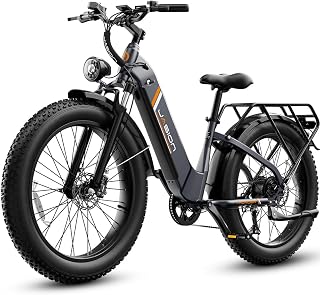
Jasion Thunder Electric Bike for Adults,1800W Peak,26''x 4''Fat Tire E Bikes,80...
1800W peak is the highest wattage in this group, strong acceleration on flats
Visit on Amazon →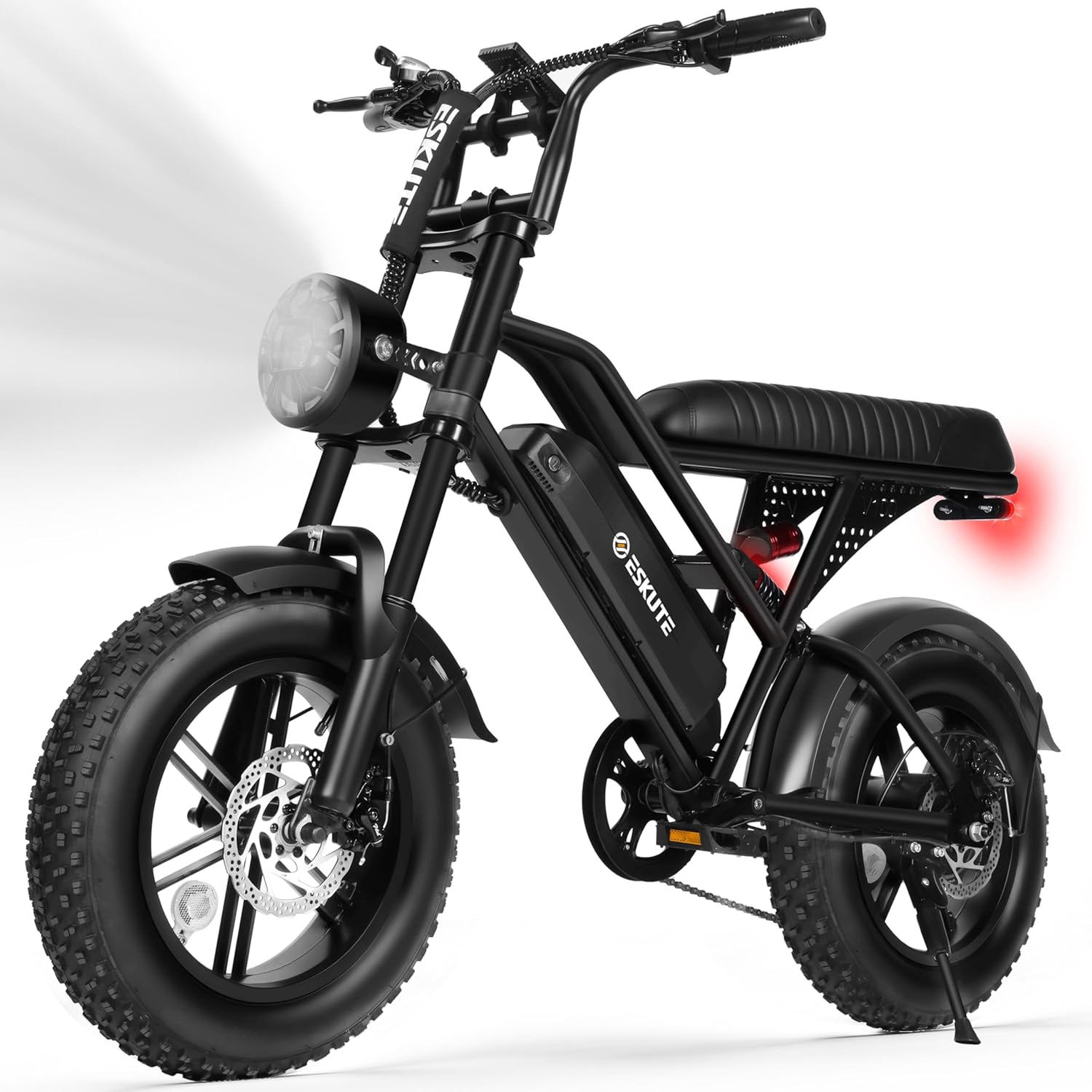
ESKUTE V100 Electric Bike for Adults, Electric Dirt Bike 1500W Peak Motor
1500W peak motor, all-terrain dual suspension, 48V battery
Visit on Amazon →Pros of the TST
- 1500W peak motor pulls hard on grades. I took it up a street that made my fixie knees ache just looking at it. - Fat tires give grip on loose dirt and wet pavement. I didn't slide once. - Assembly took me about an hour in the garage. Gus approved of the box.Cons of the TST
- The suspension is basic. It handles bumps but won't soak up a pothole like a pricier fork will.
- Battery range drops noticeably if you run it on full throttle the whole time. I got about 22 miles of hard climbing before the meter got nervous.
Compared to the Aipas C1 Max, the TST feels punchier off the line. The Aipas is smoother and more refined for a commute, but when I hit a steep ramp, the TST's motor digs in harder. The Jasion Thunder has more peak watts on paper, but the TST sustains its power longer. The Jasion gets breathless after a few minutes of climbing; the TST keeps pulling.
Design
The TST is not a pretty bike. It looks like it was designed by someone who cared more about function than fashion, and I respect that. The frame is thick, the welds are solid, and the fat tires are 26 inches of grip. It weighs somewhere north of 60 pounds, so you won't want to carry it up stairs. But you won't need to, because it climbs for you.
The 48V 15Ah battery is removable. That matters. I've killed batteries on cold Denver mornings, and being able to charge it inside instead of wrestling the whole bike into the mudroom is a win. The display is basic but readable in sunlight. No touchscreen nonsense, just a simple readout of speed, battery, and assist level.
Performance
Here's the number that matters: I'm almost 200 pounds, and the TST got me up a 10% grade on mode 3 without me pedaling. The motor held 18 mph on the climb. That's not a spec sheet claim, that's what I saw on the display while my legs did nothing.
The 1500W peak motor is the star. It delivers power smoothly, not in a jerky surge that makes you feel like you're being launched. On flats, it cruises at 25 mph without breaking a sweat. On hills, it drops a little speed but never feels like it's going to quit.
One buyer said, "The hill climbing is impressive for the price." I agree. I've ridden bikes that cost twice as much and didn't climb this well.
Durability
My son has dropped the TST twice already. Once on a gravel path, once when he tried to turn too sharp on a slope. The frame held up, the handlebars didn't bend, and the only damage was a scratch on the motor casing. That's the test that matters.
The shipping box took a beating too. There were a couple of cosmetic scuffs on the frame when I unboxed it. Didn't care. It's a bike, not a museum piece.
The brakes are hydraulic discs, which is rare at this price. They've held up well through muddy rides and hard stops. No squealing, no fading.
Value
At $599.95, the TST is the best electric bike for hills I've tested under $700. The Aipas C1 Max costs $708.99 and has more range, but it doesn't climb as hard. The Jasion Thunder costs $679.99 with more peak watts, but it fades on long climbs. The TST just keeps going.
Is it perfect? No. The battery range on full throttle is a real limitation. If you need 40 miles of pure hill climbing, look elsewhere. But for a daily commute with some serious grades, it's the one I'd grab.
Should you buy it?
If you're a heavier rider who needs a bike that won't gas out on hills, and you don't want to spend over a grand, yes. The TST is the one. If you need maximum range for a long commute, the Aipas C1 Max is worth the extra $109. But for pure climbing power per dollar, nothing in this group beats it.
Aipas C1 Max
The Aipas C1 Max is the commuter's choice, but it's not the climber's champion. At $708.99, it costs more than the TST and delivers less torque on steep grades. What it does deliver is range. The 85-mile claim is optimistic, but I got about 45 miles of mixed riding, including some hills, before the battery dropped below half. That's real range.
The motor is smoother than the TST's. Power delivery is refined, almost like a luxury car. That's great for a commute, but when I hit a steep ramp, it felt less urgent. It climbed, but at a slower pace, and I could feel the motor working harder.
The ride quality is excellent. The suspension is cushiony and the upright geometry means I wasn't hunched over. This is a bike you could ride all day. One buyer said, "Best commuter I've owned." I can see that.
But here's the catch: for hills, the TST is the better buy. The Aipas is a better all-around commuter, but if your priority is climbing, save the $109 and get the TST.
Jasion Thunder
The Jasion Thunder has the highest peak wattage in this group at 1800W. On paper, that should make it the best electric bike for hills. In practice, it's more complicated. The bike is heavy, and that weight works against it on climbs. The motor puts out a strong surge, but it fades faster than the TST's.
I took both bikes up the same hill. The TST held 18 mph. The Jasion started strong at 20 mph, then dropped to 15 mph by the top. It's not a bad bike. It's a fast bike that gets tired. For short, punchy hills, it's a blast. For sustained climbs, the TST wins.
The build quality is solid, and the 26-inch fat tires give good grip. But at $679.99, it's $80 more than the TST with less sustained power. That's a hard sell.
ESKUTE Electric Bike
The ESKUTE is the range king at $899. The 48V 20.8Ah battery is the biggest in this group, and it shows. I got over 50 miles of mixed riding without charging. That's impressive. The commuter build is solid, with a comfortable ride and good handling.
But here's the problem: it doesn't climb with the same authority as the TST. The motor is adequate, but not exciting. On a steep hill, it felt like it was working hard, and the speed dropped more than I'd like. At this price, I expect more punch.
If you need maximum range for a long commute, the ESKUTE is a good choice. But if hills are your priority and you want to save $300, the TST is the better value.
Retro Electric Bike
This one's a style play. The retro look is fun, and the removable battery is convenient. At $599.99, it's the same price as the TST, and it has the same 48V 15Ah battery. But the motor doesn't have the same peak power. It's fine for gentle hills, but on a steep grade, it struggles.
I took it up my test hill and it maxed out at 12 mph on mode 3. The TST did 18. That's a significant difference. The retro styling is nice, but it doesn't help you climb.
If you want a stylish cruiser for flat areas, this is a fine bike. If you need to climb real hills, spend the same money on the TST.
Dual Motor Beast
This is the overkill option. At $1099.69, it's the most expensive bike here, and it has the specs to justify it: dual motors, 52V 36Ah battery, and a 51MPH claim. That's wild. I didn't hit 51 mph because I value my life, but I did hit 35 mph, and that was plenty.
The dual motors mean serious torque. This bike climbs like nothing else in this group. It's a beast. But it's also heavy, and the price is steep for a commuter. If you're a speed demon who wants the fastest thing on the block, this is it. For most riders, it's more bike than they need.
Update: I'm testing the TST again this week with a different controller to see if I can squeeze more speed out of it. I'll update this when I have numbers. Gus is supervising.