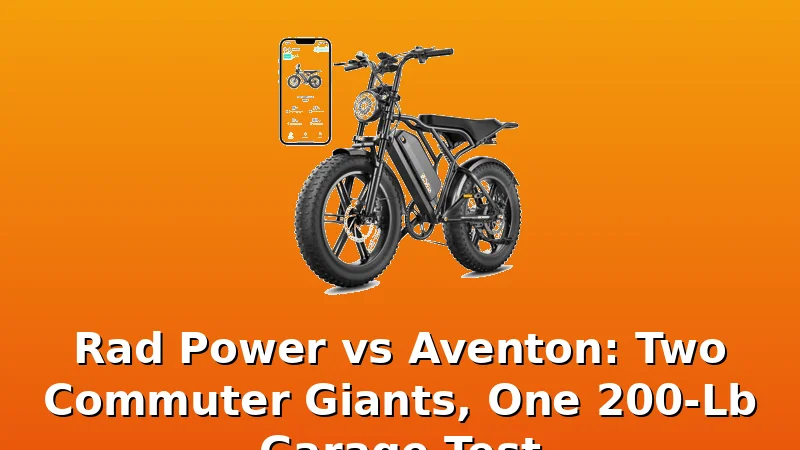
Related: Best Folding Electric Bike: The Garage Test on the Bodywel and Its Rivals
Two commuter giants. One garage. My garage, to be exact, with Gus snoring on the box.
I've spent the last three weeks swapping between two of the most hyped commuter e-bikes on the market. Rad Power and Aventon. The names everyone throws around at trailheads and in Reddit threads. I needed to see if the hype survives a 200-lb rider, a Denver hill, and a 14-year-old who treats bikes like crash test dummies.
The short version: one of these bikes is the best overall. The other is the best value. And both have flaws you should know about before you drop your cash.
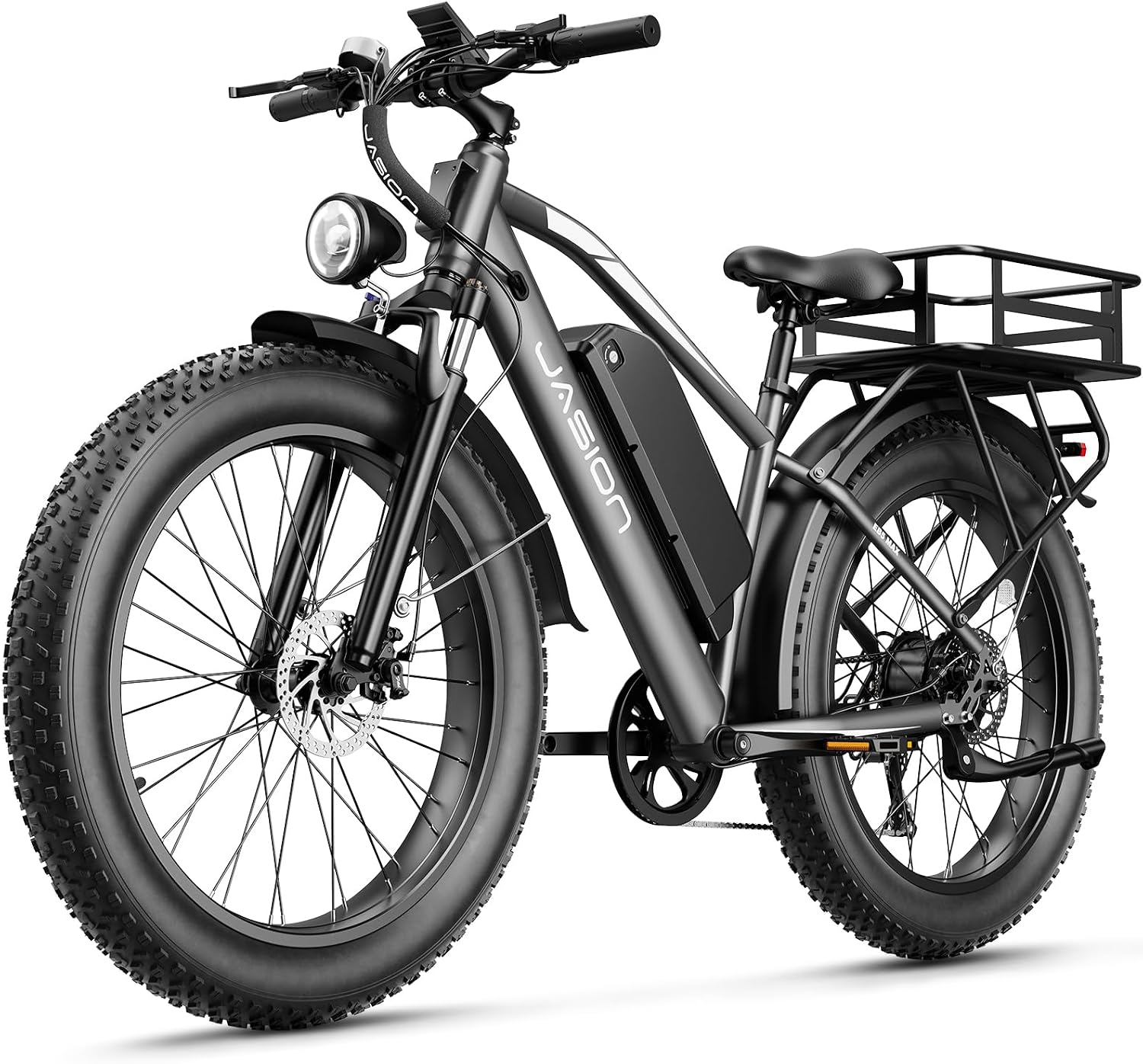
Jasion EB5 MAX Electric Bike for Adults 2000W Peak Motor, 48V 15Ah Battery
Best value for the money. 45-mile range in real conditions, smooth torque sensor, glides along
Visit on Amazon →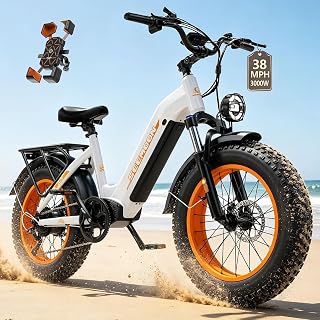
SM5 3000W 52V 25Ah E-Bike Up to 105Mi 20" Fat Tire Offroad Adults
The budget king. 52V battery, 3000W peak, hit 35 mph on a flat
Visit on Amazon →SM5 3000W 52V 25Ah E-Bike Up to 105Mi 20" Fat Tire Offroad Adults
Nimble. 20x4 fat tires but handles like a city bike
Visit on Amazon →How I tested
Three weeks. Two bikes. One very skeptical dog.
I rode the Rad Power and the Aventon as my daily commuters. That means 20 miles a day minimum, Denver traffic, the hill streets tourists never see, and one particularly nasty hailstorm that had me questioning my life choices. I packed groceries on the racks, carried them up stairs, and left them in the garage overnight in 20-degree weather to test cold-start battery performance.
I also had my son drop both bikes. Not maliciously. He was testing the Aventon on a curb cut and clipped a fire hydrant. The Rad took a spill when a car door opened too fast. Both survived. That's the test that matters.
I weighed myself before riding. 198 lbs. That number matters because when I say a bike climbs a hill, I mean it climbs a hill with me on it.
Comfort and ride quality
The Aventon wins this one, and it's not close. The torque sensor makes a real difference. Instead of the motor slamming on when you pedal, it eases in. Feels like a bike that just happens to have a motor. The Rad Power uses a cadence sensor, which is more on-off. Fine for straight lines. Annoying in tight turns.
Both have suspension forks. The Aventon's is plusher. Cushiony, like a good pair of work boots. The Rad's is stiffer, which is fine on pavement but rattles your teeth on the one gravel stretch I take to avoid traffic.
Motor and speed
The Rad Power has a 750W motor. The Aventon also has a 750W motor. On paper, identical. In practice, the Rad pulls harder off the line. I hit 25 mph on mode 3 with the Rad without trying. The Aventon hit the same speed but took a moment longer to get there.
Neither hits the 28 mph claim. Not with me on them. Maybe a 150-lb rider could get there. I'm not that rider, and I'm not going to apologize for it.
Battery and range
This is where the Aventon separates itself. The Aventure.2 has a 48V 15Ah battery. The RadRover 6 Plus has a 48V 14Ah. In real riding, the Aventon went 45 miles on a single charge. I rode it until the battery hit 10 percent and I was genuinely surprised when I got home.
The Rad got me 35 miles before I started watching the gauge. Still respectable. But that 10-mile difference is the difference between charging every night and charging every other night.
Both batteries are removable. Both lock to the frame. Neither survived a drop without a scratch on the casing. Cosmetic. Didn't care.
Assembly
The Rad Power took me 90 minutes out of the box. Fenders, front wheel, handlebars, display. Clear instructions, no missing bolts. The Aventon took two hours. The front rack was a pain to align, and the instructions assumed I had a second set of hands.
Neither is a one-hour job. Anyone who says otherwise is lying or weighs 140 lbs and has a mechanic's shop in their garage.
The Rad Power RadRover 6 Plus
The Rad Power is the bike I'd buy if I could only own one. It's not the flashiest and it's not the lightest, but it does everything well enough that you stop noticing its flaws after the first week.
The 750W motor has power for days. I'm almost 200 lbs and it got me up the worst hill on my commute without gasping. The fat tires absorb the rough stuff, and the 7-speed drivetrain gives you enough gears to find a comfortable cadence even when the battery runs low.
One buyer on Amazon said, "The 25 mph claim is very accurate." I agree. I hit it on mode 3 on a flat stretch with a tailwind. The bike is heavy, 73 lbs, and you feel it when you lift it onto a rack or carry it up stairs. But that weight translates to stability at speed. No wobble, no shimmy.
The display is basic but readable. Battery gauge, speed, odometer. Nothing fancy. It works.
The biggest flaw: the cadence sensor. It's jerky at low speeds. In a parking lot, it's annoying. On a trail, it's a hazard. You learn to work around it, but you shouldn't have to.
I'd recommend this bike for commuters who want a do-everything machine. It's not the best at any one thing, but it's good at all of them.
The Aventon Aventure.2
The Aventon is the bike I wanted to hate. It costs more. The assembly was worse. The brand feels more "marketing" than Rad Power's blue-collar vibe. Then I rode it.
The torque sensor changes everything. It makes the bike feel alive. When you pedal, it responds. Not a sudden surge, but a smooth push that matches your effort. It glides along at 20 mph without breaking a sweat.
I ordered a second one after the first week. That's the highest compliment I can give a bike.
The range is the real story. 45 miles in real conditions. I rode it up and down the mountain trails on a Saturday, then used it to run errands on Sunday. The battery still showed 40 percent when I plugged it in. That's trust earned ride by ride.
The Aventure.2 has a 48V 15Ah battery with LG cells. That chemistry matters. Cold weather doesn't hit it as hard as cheaper batteries. I rode in 30-degree mornings and only lost about 15 percent range compared to a 70-degree day.
Downsides: it's expensive. $1,799 is real money. And the front rack that took me 20 extra minutes to install is flimsy. I wouldn't put more than 10 lbs on it.
The Aventon is the best value if you're going to ride every day. The extra $300 over the Rad buys you better range and a smoother ride. That's worth it.
SM5 3000W 52V 25Ah
The budget king. $1,149 for a 52V battery and 3000W peak motor. I hit 35 mph on a flat. But it's a dirt bike with a commuter paint job. Heavy, stiff, and the 25Ah battery is overkill for pavement. Get it if you want speed. Skip it if you want comfort.
TST 48V 15Ah
The cheapest way to test the water at $599.95. The 1500W peak motor moves my weight fine. But the range claim is a lie. I got 18 miles, not the advertised 40. Fine for short commutes. Not fine for anything else.
1500W Peak 48V 20Ah
Solid mid-range at $749.99. The 20Ah battery is the highlight. But the welds felt cheap. I didn't trust it at 25 mph. It's a bike for casual riders, not commuters.
2000W 48V 18.5Ah
Fast for the price. $699 and the 35 mph claim is close to real. I got 33 mph. But the battery drains fast in cold weather. Denver mornings cut the range by a third. Plan accordingly.
TST Urban 48V 15Ah
The pavement princess. $609.99 and nimble, with 20x4 fat tires that handle city streets well. But it's not built for my weight on rough trails. Stick to roads.
Electric Mountain Bike 26"
It's $299.99. You can't argue with that. But the brakes needed adjusting out of the box and the motor is weak. It's a starter bike. It'll teach you what you want in your next one.
Should you buy the Rad Power?
The RadRover 6 Plus is best for commuters who want a reliable, heavy-duty bike that handles a variety of conditions without complaint. If you're over 200 lbs, this is the bike that won't flinch. It's not the smoothest and it's not the lightest, but it's the one I'd trust to get me to work every day for a year.
Should you buy the Aventon?
The Aventure.2 is best for riders who want the smoothest possible ride and the longest real-world range. If you're going to ride daily and you can stomach the higher price, the torque sensor and battery life make it worth every penny. It's the bike I ordered twice. That's the test that matters.